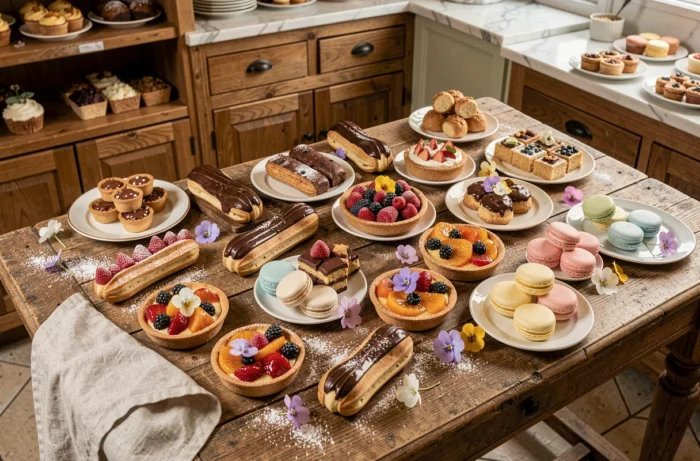
A chocolate fondant served in an individual portion, with a yuzu whipped ganache and a buckwheat sablé as a base: this is the type of dessert that is circulating on restaurant menus this season. Sweet trends are no longer just about stacking layers of cream or multiplying toppings. There is a clear shift back to the perceived quality of each bite, the mastery of textures, and a more measured use of sugar.
Smaller Portions and Premium Desserts: The Shift Towards Mindful Indulgence
On the ground, the change is first seen in the size of the plates. Chefs are offering smaller desserts, but significantly more refined. A Mintel analysis published in August 2026 confirms this shift: consumers accept modest portions as long as each bite justifies its price with noble ingredients.
In practical terms, we find cold-infused vanilla creams, identified origin salted butter caramels, and fresh seasonal fruits placed on technical bases (inverted puff pastry, gluten-free biscuit). The dessert no longer concludes the meal by volume, but by intensity.
This movement, which Mintel describes as “health-enabled indulgence,” combines three levers: reduced sweetness, ethical dimension, and functional ingredients. Feedback on this point varies among clientele, but the general direction is clear. To keep up with the news from Gourmandises et Bavardages, it’s a good indicator of what’s being prepared in shops and restaurants.

Contrasting Textures in the Same Dessert: What Menus Really Offer
There is a lot of talk about “texture play” in pastry, but what does that look like in practice this season? The most frequent combinations associate a crispy cold element (tuile, crumble, Breton sablé) with a creamy base served at room temperature.
The contrast does not only come from the crunch. Several chefs are working with very airy mousses on top of dense fruit compotes. Peach, for example, is making a strong comeback in summer desserts, paired with verbena or fresh basil.
Successful Combinations This Season
- Poached peach and light vanilla cream, with a crumble of roasted almonds: the fruit brings acidity, the vanilla rounds it out, and the crumble breaks the sweetness
- Thin tart with apricots on a base of rosemary almond cream: a pastry that plays on vegetal bitterness to balance the fruit’s sweetness
- Dark chocolate fondant with a flowing passion fruit center: the classic reimagined, but with a sharp acidity that replaces excess sugar
These recipes do not seek visual complexity at all costs. They focus on two or three well-defined flavors and a true work on texture.
European Sugar Regulation: What Changes for Jams and Breakfast Desserts
One aspect that sweet trend enthusiasts often overlook is regulatory pressure. The European directive 2024/1438, currently being implemented until 2026, modifies the rules for jams, jellies, marmalades, chestnut cream, and fruit juices.
The goal is straightforward: reduce sugar content and increase the actual fruit content. For standard jam, the minimum fruit content rises from 350 g/kg to 450 g/kg. For extra jam, it goes from 450 g/kg to 500 g/kg.
This evolution has concrete effects on breakfast and brunch desserts. Pastry chefs working with filled pastries or fruit tarts must adapt their recipes to remain consistent with less sweet and more fruity jams.
What This Means for Jam-Based Recipes
A tart base filled with a reformulated jam will have a more acidic taste and less structure when baked. This can be compensated by adding natural pectin or reducing the baking time of the base. Chefs who use jam as a binder in their entremets must also revise their ratios, because a jam with 500 g/kg of fruit does not behave like a jam with 350 g/kg.
Tart Flavors and Seasonal Desserts: The Rising Fruits
Acidic fruits are taking an increasingly prominent place on dessert menus. We are no longer just talking about lemon or passion fruit, but about less expected combinations: gooseberry, candied rhubarb, and queen-claude plums before full ripeness.
Acidity is gradually replacing sugar as the flavor driver in post-meal desserts. The reasoning is simple: after a hearty meal, diners prefer a bright note to a heavy one.
- Poached rhubarb in light syrup with mascarpone whipped cream: balanced freshness and richness, without excess sugar
- Gooseberry sorbet served with a buckwheat biscuit and a touch of chestnut honey: bitterness, acidity, and sweetness on three levels
- Carpaccio of white peaches, virgin olive oil, and fleur de sel: a dessert that borrows from savory to redefine the boundary between end of meal and appetizer
These proposals reflect a real change in palate among consumers. The gourmet trend of this season is not measured in grams of added sugar, but in precision of assembly. The pastry chefs who stand out are those who master the acid-fat-texture balance, rather than those who stack layers of cream.
This season’s dessert is summed up in one principle: less sugar, more technique, and fruits that have something to say.