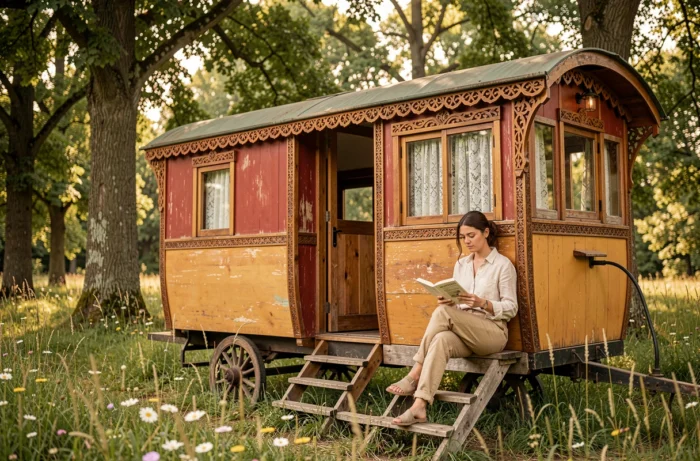
A caravan tucked away at the edge of a forest, with no neighbors in sight and nothing but the wind rustling through the leaves: it sounds like a dream. Every year, sleeping in a gypsy caravan draws travelers looking for an unusual getaway surrounded by nature, far from standardized campsites.
The problem is that the word “caravan” guarantees neither a specific level of comfort nor a single set of regulations. The experience can vary considerably between a 14 m² caravan with heating and insulation and a 17 m² model equipped with a kitchenette and bathroom.
Legal status of a gypsy caravan: what changes depending on how it is installed
People often assume that because a gypsy caravan has wheels, it is exempt from planning regulations. The reality is more nuanced. The applicable rules depend on how mobile the caravan actually is, not on its commercial name.
If it retains its means of transport (axle, wheels, and a working towing system), it may be subject to the rules governing caravans. If it is installed permanently, supported on blocks and connected to utilities, it falls under ordinary planning law, potentially with more stringent requirements.
For a short tourist stay, the distinction may seem trivial. It isn’t. On private land that is not a designated pitch, prior planning permission may be required if the caravan is parked for more than three months per year, counting all periods when it is parked there. An owner who rents out a caravan without checking whether it complies with the local planning rules is taking a risk—and so is the traveler if their stay is interrupted by an inspection.
The Dormir En Roulotte website lists accommodations whose hosts have generally clarified their administrative status, helping you avoid discovering this kind of problem on arrival.
What to expect from a gypsy caravan: things to check before booking
A stay in a gypsy caravan is not like a night in a hotel room. You accept limited space and a certain degree of rusticity. The problem isn’t the compact layout—it’s the gap between what you expect and what you find when you arrive.
Insulation and heating
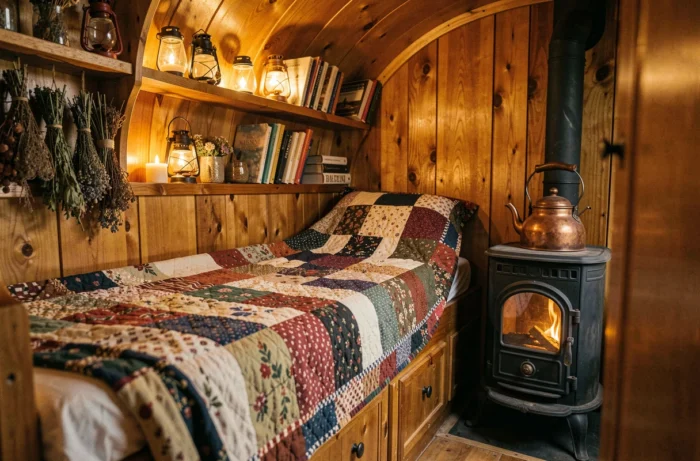
A caravan advertised as “suitable for all seasons” offers a very different experience from one designed for summer, especially in October. Check whether insulation is mentioned in the listing and what type of heating is available (wood-burning stove, electric heater, or none at all). When nighttime temperatures drop below 10 °C, a lack of heating can turn a getaway into an ordeal.
Bathroom facilities and running water
Some caravans have a bathroom inside. Others rely on a shared washroom block, sometimes several dozen meters away. Whether there are dry toilets, a shower, and hot water can make a huge difference to your stay, especially with children.
Getting to the site
A nature getaway often means taking a dirt road, forest track, or sloping field. With a low-clearance car or in rainy weather, access can be difficult. We recommend asking the host directly before booking and specifying what type of vehicle you’ll be driving.
Here are the things to check every time:
- The actual living area (listings sometimes include the terrace in the floor area, rather than just the interior)
- The type of bed: fixed bed, convertible bench, or loft accessed by ladder
- Whether electricity is available and, if so, the power supply (charging a phone is not the same as running a heater)
- How far the washroom facilities are if they are not inside the caravan
A gypsy caravan at a campsite or in a secluded spot: two different experiences
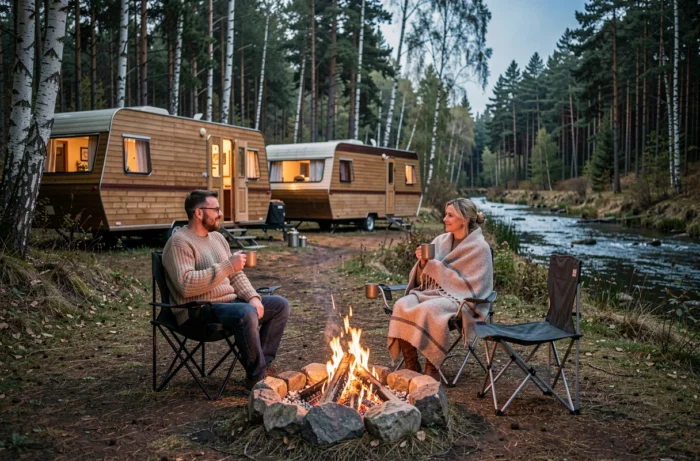
You’ll find gypsy caravans at accredited campsites, on farms, at vineyards, and beside rivers. The setting matters just as much as the caravan itself.
At a campsite, the caravan is part of a well-organized offering: a reception desk, a well-maintained washroom block, and sometimes a swimming pool or restaurant. The nature experience is more limited, and neighboring pitches are close by. In return, you benefit from organized services and a clear regulatory framework.
On private land (a farm, estate, or rural property), the setting is often more secluded. It’s genuinely peaceful, with open views and an experience closer to an upgraded bivouac. There are trade-offs: no permanent reception, sometimes basic access, and more limited facilities.
Tourist ratings can be a useful guide for caravans at campsites or other outdoor accommodation facilities. Not all caravans are rated, and the absence of a rating doesn’t mean you’ll have a bad stay. It simply means you’ll need to rely on the owner’s description and reviews from previous guests.
Planning a gypsy caravan stay in France: what makes the difference
The season you choose matters a lot. In summer, most caravans are comfortable, even without extensive insulation. Between October and April, only caravans with effective heating and adequate insulation remain comfortable.
It’s also worth thinking about how long to stay. One night is enough to try it out. Two or three nights let you enjoy the slower pace that this kind of vacation naturally encourages: waking with the daylight, eating outdoors, and going for a walk at the end of the day.
- Bring warm clothes, even in summer (nights in the countryside can be chilly)
- Pack a headlamp if the caravan is far from the washroom facilities
- Check mobile coverage if you need to stay reachable
- Ask the host whether bed linen is provided (it isn’t always)
A gypsy caravan stay works well for couples and families with children old enough to sleep in a compact space. If you’re traveling with a baby or have specific medical comfort needs, it’s best to choose a caravan with its own bathroom and electricity rather than a purely rustic model. An unusual getaway is only charming when it’s a choice, not something you have to endure.