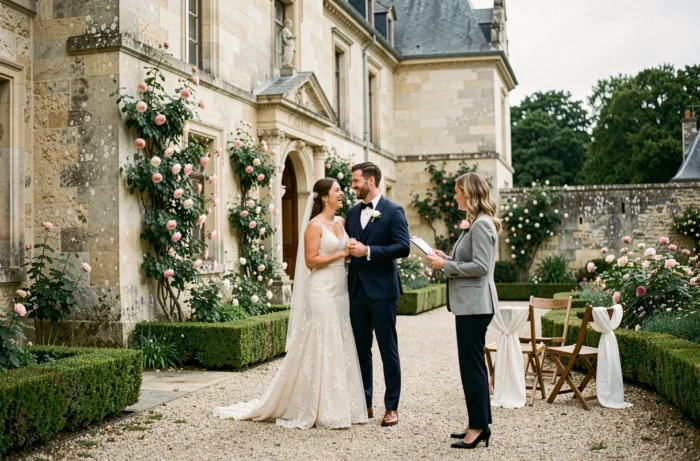
A couple signing a rental contract for a venue in October discovers, three weeks before the event, that the initially chosen caterer can no longer provide the service. The last-minute replacement is more expensive, generates stress, and forces a menu revision. This kind of situation occurs more often than one might think, and most of the time, it could have been avoided through prior coordination among the various service providers.
Coordination of wedding service providers: the real invisible work
We often focus on choosing the venue, the caterer, or the photographer. The point that truly makes a difference is how these participants work together on the big day. A DJ who is unaware of the caterer’s schedule may start the dancing while guests are still having dessert. A florist delivering without having communicated with the venue manager risks blocking access to the kitchens.
To avoid these hiccups, a single coordinator can be designated (wedding planner, organized witness, or one of the couple themselves) who centralizes contacts and provides a detailed schedule to each service provider. This document, sometimes referred to as a “day-of timeline,” specifies setup times, service slots, and transitions between each moment. Browsing the services of France Mariage allows for quick identification of professionals accustomed to working together on the same event.
A shared schedule among service providers reduces the majority of logistical surprises. This is not perfectionism; it’s operational common sense.
Wedding budget: allocate categories before seeking quotes
Many couples start by visiting venues or contacting caterers without having set a financial framework. The risk: falling in love with a venue outside their budget and having to cut back on everything else.

The most reliable method is to first define the overall budget and then break it down by category. Typically, we distinguish between the venue and accommodation, catering (caterer, drinks, wedding cake), decoration and flowers, music and entertainment, photography and video, and finally, outfits and accessories.
- The reception venue and accommodation often represent the largest expense, especially if the wedding spans several days with an informal dinner the night before and a brunch the following day.
- Catering comes right after: the choice of caterer determines the level of comfort perceived by guests, more than decoration or entertainment.
- The “ambiance” categories (DJ, band, photographer) are the ones that are most easily trimmed, even though they shape the lasting memories of the day.
A safety margin of at least ten percent of the total budget is recommended. Unexpected events always occur: replacement of a service provider, unfavorable weather, last-minute additional guests.
Outdoor reception: prepare a real weather plan
Organizing an outdoor ceremony is increasingly appealing to couples, but weather management goes beyond just having a “plan B in case of rain.” Recent recommendations from professionals go further: a plan B, or even a plan C, is needed, with clearly designated individuals responsible for initiating the backup plan.
In practical terms, this means budgeting in advance for the rental of a tent or marquee, heating if the reception extends into the evening, and possibly additional staff to manage the movement of furniture. A technical test of the backup plan, conducted a few days before the wedding, ensures that everyone knows what to do if the sky turns cloudy.
Feedback varies on this point: some venues include a covered area in their rental offer, while others do not. Checking the weather clause in the venue contract avoids unpleasant surprises.
Intimate wedding or large celebration: two different logics
Industry professionals observe a clear trend towards more intimate formats, with tighter guest lists and celebrations that extend beyond the traditional Saturday afternoon. Professionals surveyed in Dordogne report this evolution, combined with an extension of weddings beyond the traditional summer period.
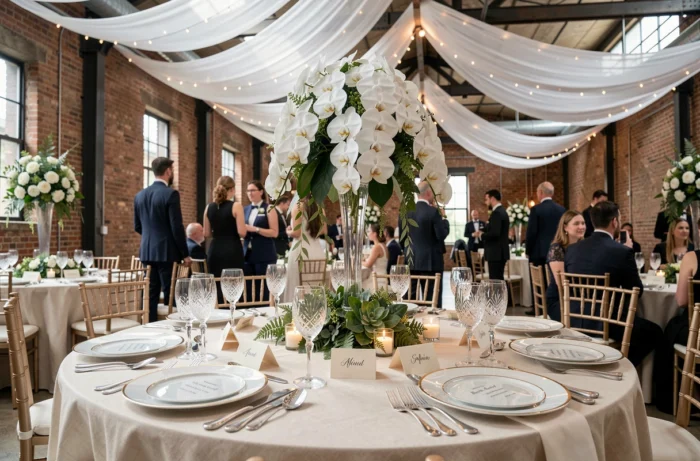
A wedding spanning two or three days redistributes the budget differently. The venue and accommodation take a larger share, while decoration can be simplified since the atmosphere relies more on the time spent together than on spectacular decor.
Conversely, a one-day wedding with a large number of guests concentrates expenses on the caterer and entertainment. The chosen format determines the hierarchy of budget categories, not the other way around.
Selection of service providers: questions to ask before signing
Contacting a service provider, receiving a quote, signing. This quick circuit omits a step that avoids most disputes: asking the right questions before committing.
- What is the cancellation or postponement policy, and within what timeframe is a partial refund possible?
- Has the provider worked at the chosen venue before, and do they know the access, noise, or timing constraints?
- What are the exact conditions in case of replacement of the designated person (replacement photographer, second DJ)?
- Does the quote include travel expenses, the provider’s meal on-site, and any potential overtime?
These questions are not mere formalities. A provider who is transparent about their working conditions is generally reliable on the big day. Professionals who refuse to detail these points deserve to have the search continued elsewhere.
There is also a noticeable decline in standardized decorative themes (bohemian, rustic, industrial) in favor of celebrations built around the couple’s personal story, their travels, and their shared memories. This shift makes dialogue with each provider about the real personalization of their services even more essential.
A well-organized wedding does not rely on a perfect plan, but on a framework strong enough to absorb unexpected events. The quality of coordination, clarity of the budget, and the choice of service providers with whom communication is smooth matter more than any generic checklist.