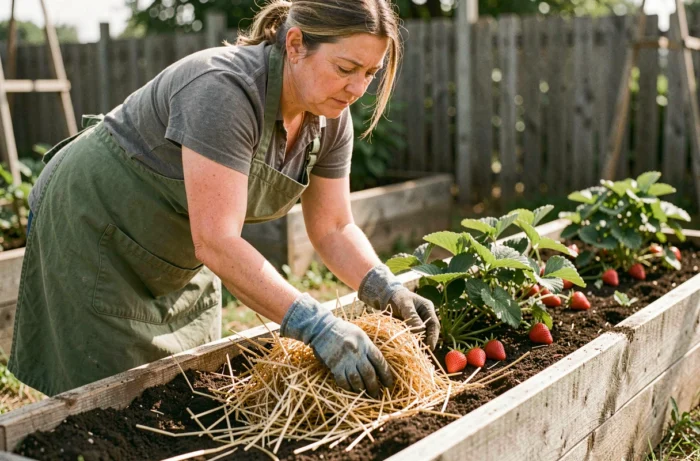
The mulching of strawberry plants is no longer just a gardening comfort. Since the summer of 2026, prefectural water restriction orders impose a watering ban between 8 AM and 8 PM in many French departments. Some crisis levels only allow watering of vegetable gardens on the condition of minimizing losses, directly citing mulching among the accepted practices. Comparing the available materials allows for measuring their actual capacity to retain water and space out watering.
Moisture Retention According to the Type of Mulch for Strawberries
Not all mulches are equal when it comes to evaporation. The choice of material directly affects the frequency of necessary watering, the health of the roots, and the quality of the harvested fruits. The table below summarizes the characteristics of the main mulches used at the base of strawberry plants.
| Type of Mulch | Moisture Retention | Soil Contribution | Duration Before Renewal | Main Risk |
|---|---|---|---|---|
| Wheat or Rye Straw | Good | Fertilizes as it decomposes | One season | Can host slugs |
| Shredded Dead Leaves | Very good | Enriches with humus | Several months | Compaction if not shredded |
| Pine Needles | Average | Slightly acidifying | Two seasons | Excessive acidification on already acidic soil |
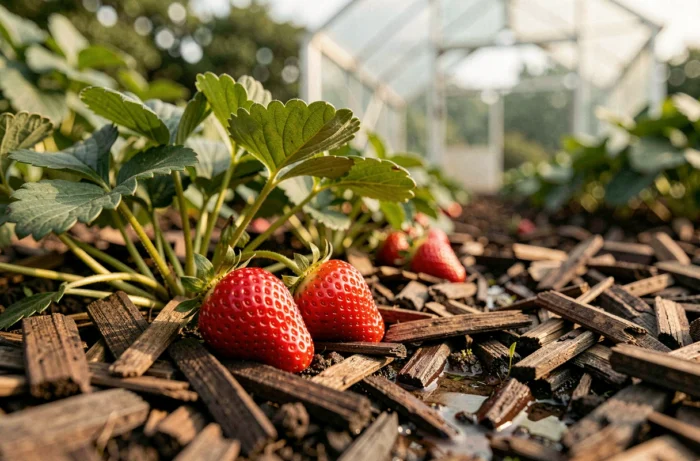
| BRF (fragmented branch wood) | Very good | Stimulates microbial life | One to two years | Temporary nitrogen hunger |
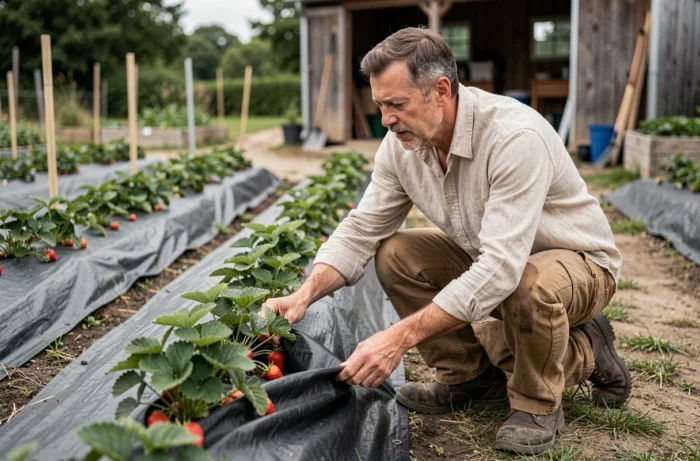
| Woven Mulch Fabric | Good (limits evaporation) | None | Several years | No fertilization, less lively soil |
| Mineral Mulch (slate, pumice) | Low | None | Nearly unlimited | Heat released at night, unsuitable in hot climates |
Organic mulches (straw, leaves, BRF) have a double advantage: they retain moisture and nourish the soil as they decompose. Mineral mulches, on the other hand, do not compensate for losses in organic matter and can even exacerbate thermal stress on strawberry plants by releasing accumulated heat.
Several gardeners combine two layers, for example, BRF covered with straw. This combination protects the shallow roots of strawberries while maintaining a constant moisture level beneath the surface layer.
Organic Mulching and Watering Restrictions in the Vegetable Garden in 2026
The regulatory framework has changed the game. In crisis levels, several departments condition the authorization to water the vegetable garden on the use of practices that limit losses. Mulching and drip irrigation are among the methods explicitly mentioned in these orders.
Specifically, a strawberry plant grown in bare soil under full sun requires almost daily watering as soon as temperatures exceed summer thresholds. With a thick organic mulch, the frequency of watering decreases significantly. The mulch layer blocks direct radiation on the soil, slows evaporation, and keeps the soil cool for several days after watering.
To delve deeper into these natural techniques on Jardiner Naturellement, it suffices to note that the logic is the same everywhere: covering the soil means storing water where the roots of the strawberries can actually use it, instead of letting it evaporate.
Gardeners who grow strawberries in pots are equally concerned. The potting substrate dries out faster than in the ground. A layer of straw or shredded leaves on the surface slows this loss and reduces the need to compensate with additional watering, including in the evening when restrictions allow it.
Thickness and Timing of Mulch Application at the Base of Strawberries
The thickness of the mulch is the most underestimated parameter. If too thin, the mulch does not slow evaporation. If too thick, it promotes excess moisture at the crown of the plant and fungal diseases.
- For wheat straw or shredded dead leaves, a layer of about five centimeters offers a good compromise between water retention and air circulation around the crown of the strawberry plant.
- BRF should be applied in a thinner layer (three to four centimeters) because its density naturally limits evaporation while allowing rain to penetrate to the roots.
- Pine needles, being lighter, require a slightly thicker layer to be effective, but they should not be compacted: their airy structure is part of their benefit.
The timing of application is as important as the material. Mulching after flowering protects the fruits from contact with wet soil, which limits gray mold (botrytis). Applying the mulch too early, before the soil has warmed up in spring, delays the vegetative recovery of the plants.
At the end of the season, partially decomposed organic mulches can be incorporated into the soil during autumn digging. This organic matter feeds the microbial life of the soil and improves its structure for the following season, which directly benefits the runners that your strawberries will have produced during the summer.
Common Mistakes That Cancel the Benefits of Mulching Strawberries
Mulching on already dry soil is the first mistake. The mulch retains the moisture present, but it does not create water. A generous watering just before applying the mulch conditions the entire effectiveness of the setup.
The second mistake concerns the choice of colored or treated mulches sold in garden centers. Some dyed wood chips contain chemical residues that have no place in contact with fruits intended for consumption. For an organic vegetable garden, untreated cereal straw or dead leaves from the garden remain the safest options.
- Do not mulch up to the crown of the plant: leaving a space of two to three centimeters around the base prevents foot rot.
- Check under the mulch regularly: slugs and voles appreciate the moisture and darkness provided by the mulch layer.
- Renew the organic mulch as soon as it becomes too thin: a straw mulch reduced by half after a few weeks no longer fulfills its function.
Mulching strawberries remains one of the most cost-effective actions in the garden: a layer of organic material properly applied on moist soil, renewed when it thins, significantly reduces watering while improving the quality of the harvested strawberries. With water restrictions tightening every summer, this practice has moved from being a gardening tip to a condition for continuing to cultivate one’s vegetable garden.