
The spring-summer 2026 collections mark a turning point in the female silhouette. The oversized cuts, which have been ubiquitous for several seasons, are giving way to more fitted and structured lines. This shift affects both everyday ready-to-wear and designer pieces, and it is accompanied by a changing regulatory framework with the French law governing ultra-fast fashion. The fashion landscape is being reshaped on two simultaneous fronts: style and production.
Structured cuts and fur details: what really changes in the 2026 silhouettes
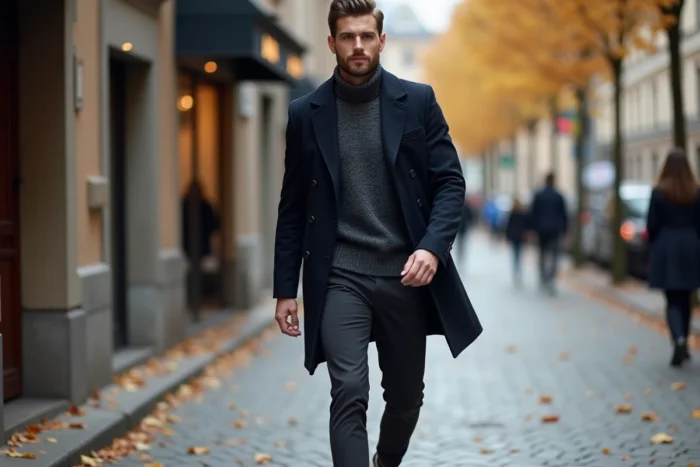
The decline of oversized does not mean a return to the body-hugging cuts of the 2010s. The silhouettes that are emerging this season play with the architecture of the garment: pronounced shoulders, waists emphasized by darts, straight trousers with pleats. Structure takes precedence over volume.
Among the details that define the season, fur finishes on collars, hems, and sleeves are recurrently noted in market analyses. These elements serve as accents on otherwise understated pieces, making them adaptable to an existing wardrobe without requiring a complete overhaul.
On the accessories front, two trends stand out. Sculptural design bags, with rigid geometric shapes, are replacing soft and informal bags. Heels are making a comeback as the reference shoe, after several seasons dominated by sneakers and chunky loafers. To keep up with all the fashion on FashionUp, these silhouette evolutions deserve to be observed over time rather than adopted en masse.
Anti-fast fashion law in France: a regulatory framework that impacts clothing choices
One fact largely goes unnoticed in articles dedicated to trends: France is in the process of legally defining what ultra-fast fashion is. The text, debated in the National Assembly and then in the Senate, aims to regulate brands whose collection renewal rate exceeds a deemed excessive threshold.
The stated goal is to curb the most polluting production models. The practical consequences for consumers remain unclear: the available data does not allow for conclusions about the real impact in terms of price or product availability in the short term.
However, this legislative framework accelerates a movement that has already begun. French brands are repositioning their communication around sustainability, and capsule collections are gradually replacing weekly drops at several mid-range brands.
What this changes for building a sustainable wardrobe
Buying less but better is no longer just a stylist’s advice. It is a direction the market is taking under regulatory pressure. Prioritizing pieces whose cuts and materials withstand several seasons is becoming an economically rational reflex, not just an ethical one.
- Check the material composition on the label before purchase: a fabric with a significant proportion of natural fibers (linen, cotton, wool) ages better than a 100% synthetic one.
- Prefer classic cuts (straight blazer, straight dress, pleated trousers) that transcend seasons without appearing dated.
- Limit pieces heavily marked by a seasonal trend to one or two purchases per season, integrating them as accents into existing outfits.
Circular fashion and upcycling: beyond the discourse, an economy that is structuring
Circular fashion is entering a phase of economic maturity. It is no longer a niche segment reserved for activist brands. Mid-sized players are now integrating upcycling into their standard production chain, and the resale of second-hand clothing is becoming professionalized with platforms that guarantee the condition and authenticity of the pieces.
Field reports diverge on one point: perceived quality. Some consumers believe that an upcycled garment offers a unique character. Others see it as a compromise on finishes. The reality largely depends on the manufacturer’s know-how and the final product’s price.
Which materials to watch this season
The choice of materials has become a criterion of style as much as durability. Heavy and textured fabrics (tweed, gabardine, thick linen) are gaining ground in the autumn-winter collections, while spring-summer 2026 focuses on fluid yet structured materials, such as crepe and matte satin.
- Linen remains a safe bet for summer pieces: it wrinkles but develops a patina, giving it character over time.
- Plant-based leather is progressing in the accessories offer, with a notable improvement in durability compared to earlier generations.
- Cotton-wool blends appear in mid-season collections, offering a good compromise between comfort and structure.
Autumn-winter 2026 fashion trends: first signals to watch
The first presentations for autumn-winter 2026 confirm the direction taken in spring. The silhouettes remain fitted, with volumes concentrating on the upper body (shoulders, collars) rather than on the entire outfit. The bohemian style, which returns cyclically, is emerging in a more streamlined version than its previous iterations: long dresses in heavy materials, controlled layering, muted color palette.
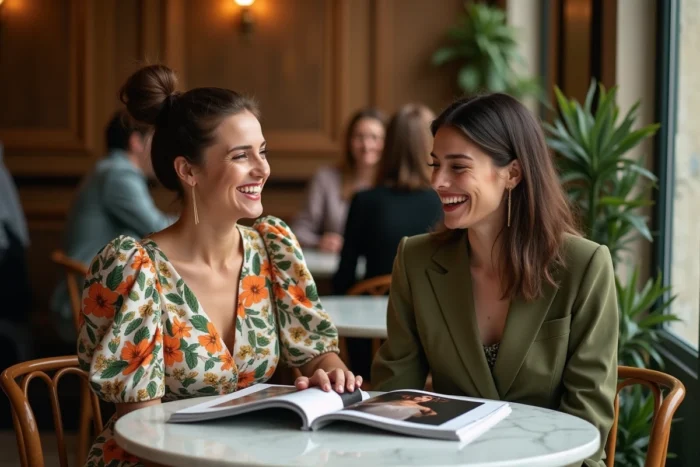
The everyday look is built around a few strong pieces rather than an accumulation of trendy elements. A structured blazer worn over a fluid dress, a heel paired with straight trousers, a sculptural bag as the only visible accessory: the 2026 trend rewards restraint over excess.
This orientation also reflects a change in how fashion is disseminated. Social media, long vectors of ephemeral micro-trends, are seeing the emergence of content creators who value the longevity of a personal style over constant renewal. The style guide is no longer read like a seasonal catalog, but as a tool for arbitrating between what lasts and what fades.